Born
5/06/1925


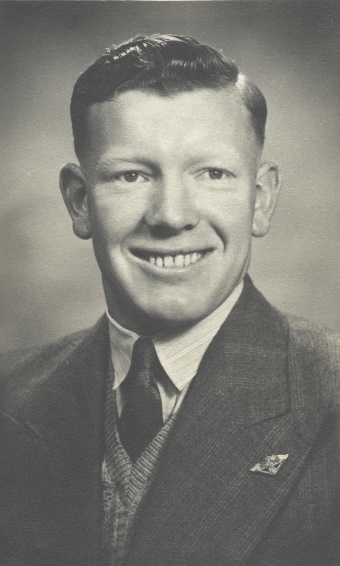
Bob "Bluey" McClure was one of Essendon's greatest ruckmen. He came to the Club after a war-time stint in the Navy from 1943 to 1945. He represented the Peninsula League during this period and was noticed by scouts from Essendon and Footscray. His mother received invitations for him from both clubs but put them aside until the end of the War. Prior to joining up, he had played with Essendon Stars, where one of his team-mates was future Essendon legend, Bill Hutchison.
He dominated games with his high-marking and superb hit-outs and appeared to have the longest arms and surest hands of any big man in the game.
McClure, known as "Bluey" because of his red hair, starred in the ruck in the 1946 premiership win and was then best on the ground in the 1949 premiership victory. He also played well in the 1950 premiership team. He played a total of 14 finals games, including six consecutive Grand Finals from 1946 to 1950, for three wins, two defeats and one draw.
McClure played for Victoria in 1948 and 1950 and was selected in The Sporting Life All-Australian side in 1948.
He also scored Essendon's third most Brownlow Medal votes in 1948 and 1949, and won the Most Consistent Player award in 1948 and the Best Clubman award in 1950.
McClure badly injured his knee in the second game of 1951 against Hawthorn when he stepped in a hole and never played again. He served on the Essendon Committee in 1953 and 1954.
He was named at number 46 in the Champions of Essendon (2002).
McClure retired in 1987 from Claude Neon where he had worked for forty six years (he was responsible for the famous "A. W. Allen" sign in South Melbourne). He was also a columnist for The Sporting Globe.
He was named at number 46 in the Champions of Essendon (2002).
Bob Mc Clure died on 18th June 2003 after a long illness.
5/06/1925
18/07/2003
183 cm
90 kg
Meeniyan/Peninsula League/Essendon Stars
604
31
90
17
1946, 1949, 1950
Most Consistent Player 1948
Best Clubman 1950
1946, 1949, 1950
29
Champions of Essendon no. 46
Life member
Victorian representative 1948, 1950